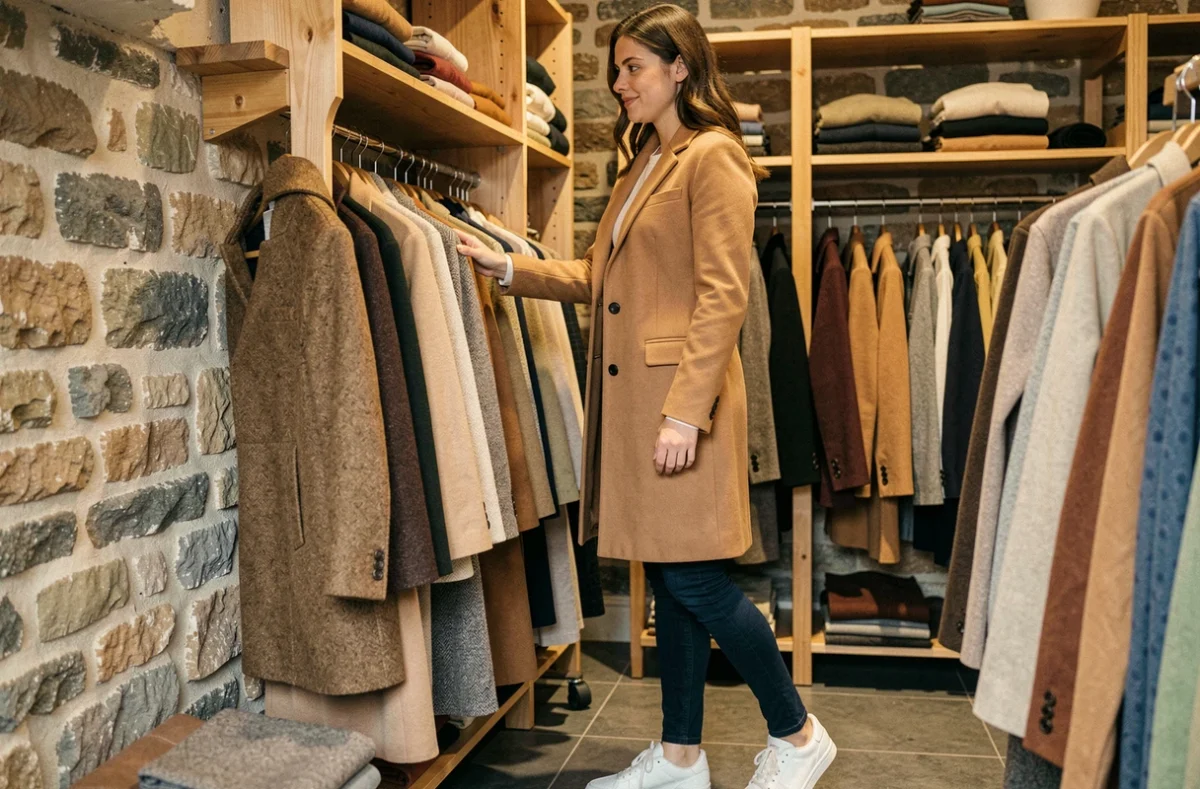
Fashion in Rennes is shaped by an ecosystem of locally trained designers, shops committed to supply-chain transparency, and an oceanic climate with its own dress-code rules. Understanding these three factors gives you a more reliable way to choose what to wear than any Instagram feed when building a cohesive everyday style.
Technical fabrics and sustainable materials: the textile foundations of Rennes boutiques
Material choice determines a garment’s longevity as much as its comfort. In Rennes, where drizzle can set in several times a week, independent boutiques tend to select fibres that resist moisture and abrasion. Merino wool, brushed twill cotton and linen blends can handle bike commutes without losing their shape after three washes.
Responsible fashion retailers such as Beau Jour favour garments made in Europe, with limited collections that help avoid overproduction. This approach is not just ethical: it ensures a fabric weight dense enough to last for several seasons, unlike an ultra-fast-fashion equivalent that can stretch out after just a few weeks.
French regulations are moving towards tighter controls on ultra-fast fashion. This makes it all the more important to check a garment’s composition and country of manufacture before buying—two details Rennes designers generally display without being asked. We’ve found that shops in the city centre (rue Saint-Georges, rue de la Visitation) are providing increasingly detailed information about their supply chains.
Following fashion news on Rennes 17h20 is a good way to discover new shops that champion textile transparency, a criterion often missing from traditional tourist guides.
Rennes style and the weather: adapting trends to everyday life

Following a trend without considering how you get around is a recipe for buying something that ends up in the back of your wardrobe. In Rennes, modular layering is the foundation of a practical wardrobe. A chilly morning, a mild lunchtime and a late-afternoon shower: three different conditions in one day call for layers that are easy to take off and carry.
Local designers, whether ESMOD Rennes graduates or self-taught, factor this into their cuts. You’ll find unlined jackets with inner pockets large enough for a beanie or a lightweight scarf, trousers with hems that stand up to splashes, and crossbody bags suited to travelling by bus or walking over the cobbles of the historic centre.
Pieces that really work in the city
- A trench coat or mid-length water-repellent jacket, structured enough for the office but flexible enough for a bike ride along the banks of the Vilaine
- A thick-knit jumper (wool or heavyweight cotton) that can replace a coat between March and May, when temperatures in Rennes can fluctuate sharply from one day to the next
- Shoes with lug soles, preferably made from treated leather or breathable synthetic material, to handle wet cobblestones without compromising on style
- A backpack or sturdy canvas tote, better suited to Saturday morning shopping at the Marché des Lices than a flimsy tote bag
Every piece should serve at least two purposes: comfortable movement and a cohesive look. This dual criterion is what sets a wardrobe designed for Rennes apart from one designed for a lookbook.
Environmental labelling for clothing: useful, but incomplete
Environmental labelling for clothing is now regulated in France, but it remains voluntary for most brands. Where available, the score provides an indication of a product’s carbon footprint, water consumption or recyclability. For shoppers in Rennes, it offers an additional point of reference when comparing two similar items in a shop.
Information about environmental impact may also be available outside a brand’s usual channels. Third-party platforms compile data reported by manufacturers and make it accessible. So a local designer who doesn’t promote an environmental score isn’t necessarily less responsible—they may simply not have taken steps to report one.
An analysis of the public register of declared products highlights that results depend on the impact categories selected and the data provided. The register does not cover the entire market. When shopping for clothes in Rennes, this reference point can complement questions about a garment’s composition, manufacture and durability, but it cannot replace them.
What the label doesn’t tell you
An environmental score doesn’t measure fit or how well a garment holds up over time. A jacket with a good carbon score can lose its shape after a few weeks if the fabric is too lightweight for everyday wear. Conversely, a garment with no displayed score, made in a small batch by a workshop in Brittany, could last for years thanks to a well-designed pattern and careful finishing.
Rennes boutiques that work with local designers (Al-Blimsey, Fata Mangrova or the labels stocked at Beau Jour) often let you inspect the seams, feel the fabric and ask direct questions about where it comes from. This hands-on experience remains the best complement to any label.
Fashion budget in Rennes: balancing price and longevity
A garment’s price doesn’t tell you what it really costs. Cost per wear is calculated by dividing the purchase price by the number of times the garment is actually worn. A more expensive coat from a Rennes designer that you wear for three winters costs less in the long run than a jacket you replace every season.
The limited collections offered by responsible boutiques in Rennes reduce the risk of getting tired of a garment: when it isn’t worn by thousands of people, you’re more likely to keep it for longer. This is as much a psychological incentive as an economic one.
- Prioritise durable basics (trousers, jackets and shoes) from a local designer or a traceable European brand
- Set aside your “trend” budget for accessories or secondary pieces, which are easier to update without inflating your annual spending
- Always check the composition and fabric weight before buying, especially for garments worn outdoors
Rennes’ fashion scene, supported by ESMOD and a thriving network of independent designers, offers plenty of choice for building a wardrobe suited to the climate, your commute and your actual budget. Everyday style is less about following trends than choosing pieces that stand the test of time—in every sense of the phrase.