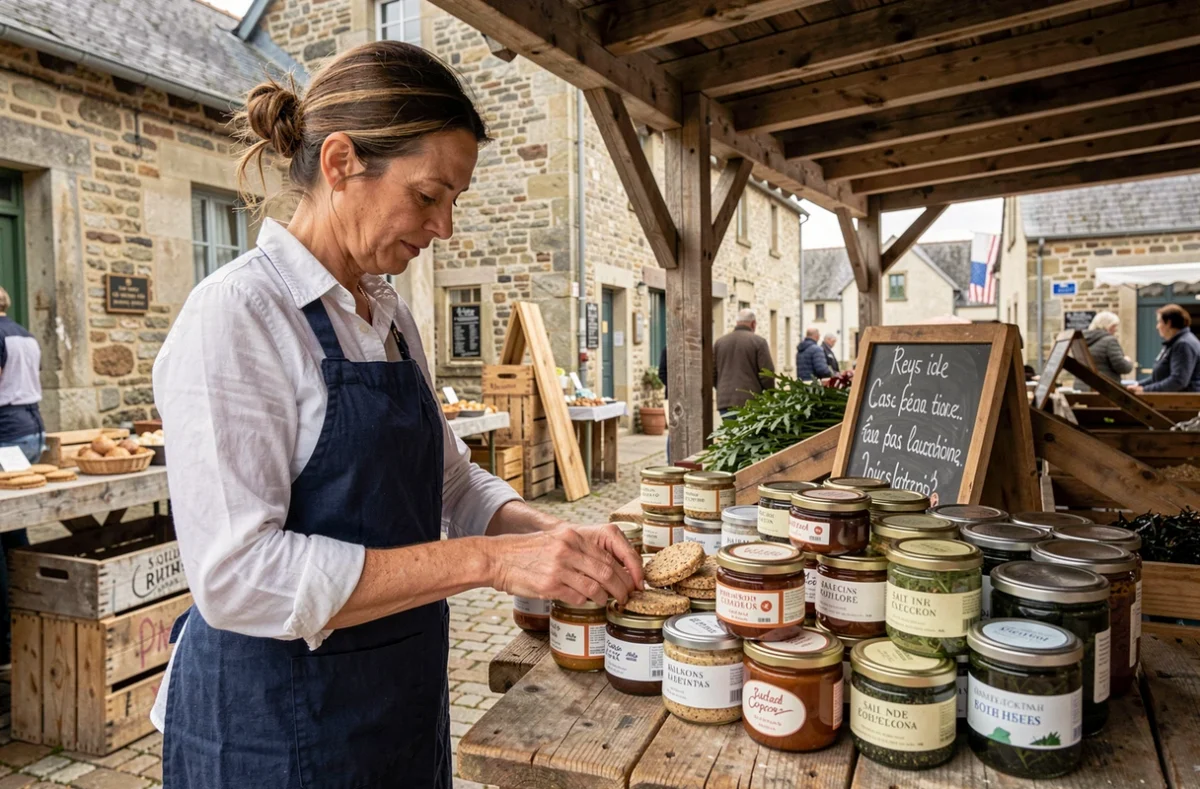
A local Breton product refers to a good or service whose raw materials, processing, and labor are located within the territory of historical Brittany. For a company, integrating these products into its operations is not just about putting a flag on a package: it involves a supply chain, a supplier relationship, and often a requirement for precise labeling.
Local Breton Sourcing: A Competitive Lever Before Being a Marketing Argument
Before any communication, local sourcing presents a measurable operational interest for Breton companies.
The caterer Madel, in Auray, illustrates this point. By establishing a regular relationship with a neighboring farm, the company secured a reliable weekly delivery and conditions deemed competitive compared to its previous suppliers. Geographical proximity reduces lead times and simplifies logistics.
This type of partnership works because it is based on mutual commitment: the producer secures an outlet, and the company secures a consistent volume and quality. Therefore, before seeking a logo or label, the first step is to identify one or two local suppliers whose production schedule matches your actual needs.
To explore the Breton sectors organized around this logic, you can visit Terre de Breizh for businesses and identify producers listed by industry.
Business Networks in Brittany: Structuring the Supplier-Buyer Relationship
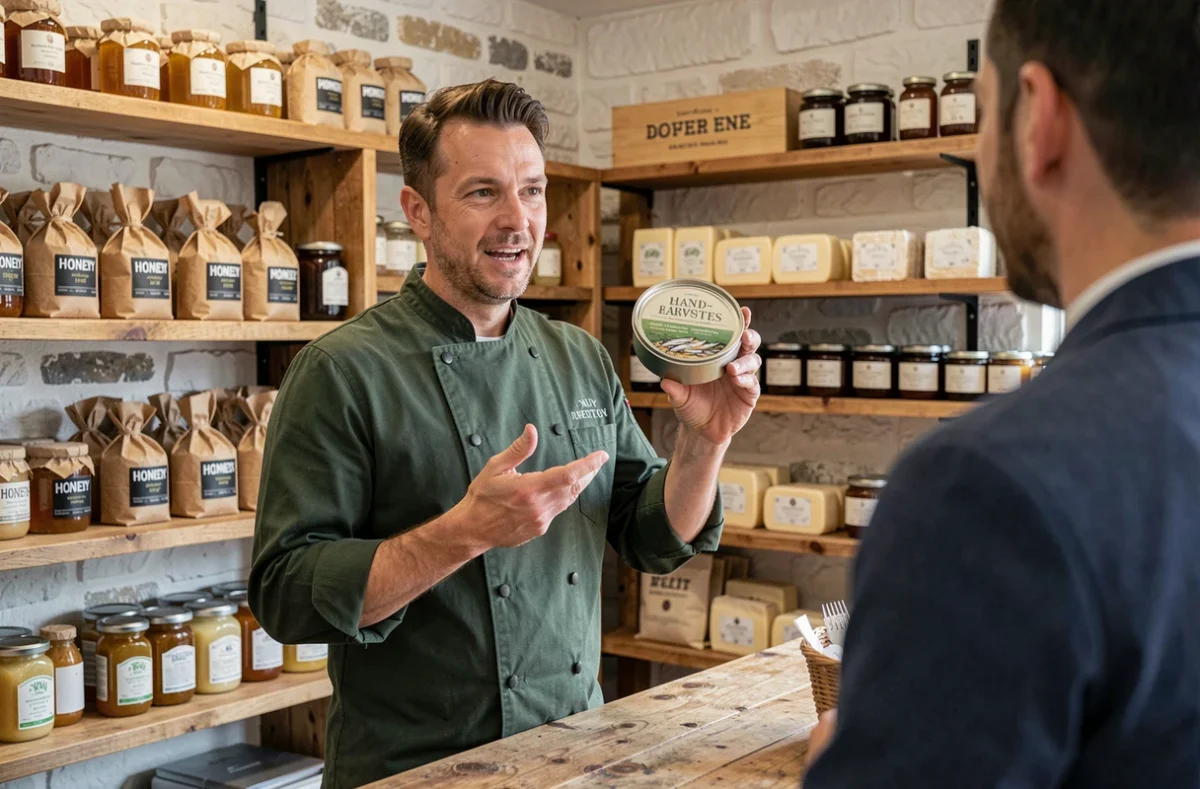
Finding the right local supplier does not always happen through word of mouth. Several local initiatives exist to connect producers and professional buyers.
In the Auray region, support led by the CCI of Morbihan with the local authority has helped connect restaurateurs and producers around regular orders for various products. This type of program significantly shortens the prospecting time for a company starting local sourcing.
The Produit en Bretagne network brings together companies divided into several colleges covering agri-food, culture, distribution, and services. Joining this network provides access to inter-member meetings, collective promotion tools, and a logo recognized by Breton consumers.
The criteria for benefiting from these networks depend on your sector:
- In catering or catering services, local CCIs offer targeted connections with producers capable of delivering regularly
- In retail, the Produit en Bretagne logo on your shelves signals to customers a verified origin and a territorial commitment
- In business services, the “engineering” or “services” colleges of the network open up opportunities for cross-partnerships with other Breton structures
Breton Products in Corporate Catering: A Concrete Employer Advantage
The local offer is not only about selling to the end customer. Offering meals based on Breton products to employees is a loyalty lever that few companies exploit.
L’Atelier des 3 sœurs, for example, provides companies with vegetarian, organic, and seasonal dishes packaged in jars. This format requires neither a cafeteria nor collective kitchen equipment. The company Biogroupe tested this service for nine months in real conditions, demonstrating that the model can work beyond the novelty effect.
For a Breton SME, this type of offer serves multiple functions simultaneously: improving quality of life at work, promoting short supply chains among teams, and reducing the logistical footprint associated with meals. The cost remains to be evaluated on a case-by-case basis, but the absence of investment in infrastructure (no cafeteria to build) makes it accessible to modest-sized structures.

Seasonality and Labeling: Constraints to Anticipate with Local Breton Products
Betting on local means accepting a variable that industrial sourcing masks: seasonality. Planning for alternative suppliers during periods of tension remains a basic precaution.
Labeling is another point of vigilance. In France, origin mentions on food products are regulated. Displaying “local product” or “Breton product” engages your responsibility: the declared origin must correspond to the reality of the production chain. A labeling error can lead to penalties and, above all, destroy the trust you are trying to build.
Elements to check before communicating about the Breton origin of your products:
- The processing location must be in Brittany, not just the packaging or labeling
- The main raw materials must come from the territory, or the proportion must be clearly indicated
- The mentions “homemade” in catering adhere to legal criteria distinct from simple geographical origin
- A network logo (Produit en Bretagne, for example) does not exempt from mandatory regulatory mentions on the label
A structured local sourcing protects better than mere marketing display. Breton companies that gain a sustainable advantage from this approach are those that treat local sourcing as a logistical and contractual choice, not as an afterthought marketing argument.