International culinary trends are not just a list of popular dishes. They reflect underlying movements related to migration flows, social networks, fast food, and supply chains for ingredients. Understanding which world cuisines are gaining visibility, and why others remain marginal despite their richness, requires examining the concrete mechanisms of spreading a cuisine beyond its borders.
Criteria for the International Spread of a World Cuisine
A cuisine does not become trendy solely based on the quality of its recipes. Several structural factors determine its ability to export, and their absence explains why certain culinary traditions remain invisible in major European or North American cities.
- The availability of ingredients plays a decisive role. Italian cuisine has established itself everywhere because flour, tomatoes, olive oil, and cheese are easy to source. A cuisine that relies on fresh products that are hard to find outside its area of origin struggles to establish itself sustainably.
- The presence of an active diaspora in the restaurant industry creates a natural diffusion network. Chinese, Indian, or Lebanese communities opened restaurants long before their cuisines were considered trendy, laying the groundwork for gradual familiarity.
- Virality on social media accelerates the visibility of photogenic or spectacular dishes, but it is not enough to establish a cuisine in the long term without support in commercial restaurants and large distribution.
- The role of cultural industries (film, series, music) is not negligible. The Korean wave is the clearest example: the global success of K-pop and Korean series has directly fueled curiosity for kimchi, gochujang, and bibimbap-type dishes.
These criteria explain a de facto hierarchy. West African cuisines, for example, have a repertoire of rice-based dishes, peanut sauce, and grilled meat that could appeal widely, but the lack of structured supply chains hinders their diffusion in European restaurants.
A detailed overview of the most appreciated dishes around the world is offered by the world’s favorite dish according to Monde Gourmandises, which maps specialties country by country.

Korean and Japanese Cuisine: Two Models of Conquering the European Palate
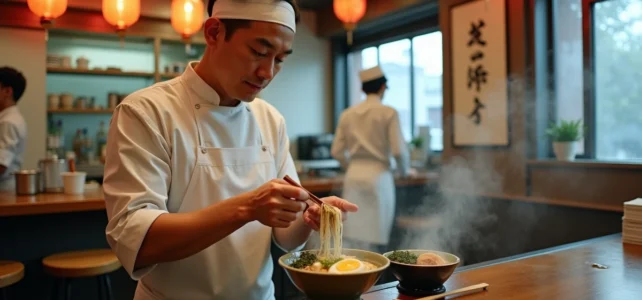
Japanese cuisine has long been reduced to sushi in Europe. This shortcut is fading. More accessible formats like ramen, donburi, or izakaya-style street food are gaining visibility in major cities. This evolution reflects a shift from perceived high-end to a more casual and everyday offering, more compatible with the quick meal habits of the French.
Korean cuisine follows a different but equally striking trajectory. Gochujang (fermented chili paste) has become a product now found in supermarkets. Marinated skewers, Korean fried chicken, and fermented rice dishes meet a demand for intense flavors and quick preparation.
These two cuisines share a common point: they have benefited from massive cultural support (manga, anime, K-pop, series) that has familiarized a young audience with their ingredients and meal codes. Gastronomy follows culture, not the other way around.
Plant-Based Recipes and “Healthy Exotic” Dishes in Culinary Trends
The exaltation of plant-based foods is no longer a niche phenomenon. The growing demand for international dishes perceived as lighter and more customizable is reshaping restaurant menus and delivery services.
Cuisines that naturally incorporate a large share of plant products are standing out. Lebanese cuisine (hummus, tabbouleh, falafels), Indian cuisine (dhal, vegetable curry, naan), and some Southeast Asian specialties based on coconut milk and fresh vegetables meet this expectation without needing to reinvent themselves.
The “healthy exotic” combines taste adventure and a perception of lightness, two criteria that weigh heavily in the current food choices of the French. Bowls (poke, buddha bowls) illustrate this convergence: they borrow ingredients from several culinary traditions, assemble them in a visual and modular format, and adapt well to both takeout and home preparation.

African Cuisines and Arab World Gastronomy: An Underutilized Potential
West African and North African cuisines are gaining visibility but remain underrepresented in content and restaurant offerings dedicated to world cuisine. Moroccan tagine or Senegalese thiéboudiène (rice with fish) are known to enthusiasts but have not reached the status of trendy dishes like ramen or tacos.
Several barriers explain this gap. Peanut sauce, millet, or okra do not yet have distribution channels comparable to those of soy or curry powder. Specialized restaurants exist but remain concentrated in a few neighborhoods of major metropolitan areas.
The richness of the African culinary repertoire is not in dispute. Dishes based on grilled meat, spicy sauces, and fragrant rice check all the boxes for international taste. What is lacking is the industrial and media support that Asian cuisines have benefited from over the past two decades.
What Could Change the Game
The rise of African chefs in culinary competitions and international guides is helping to change perceptions. Maghreb cuisine, supported by a large diaspora in France, has a more solid grounding: specialties like couscous, skewers, or tandoori (via the Maghreb and Indian cuisine of working-class neighborhoods) are already part of the daily food habits of the French.
The next wave of international culinary trends could very well come from the African continent, provided that the distribution channels for ingredients follow. A cuisine does not travel without its products.