
Small brown beetles a few millimeters long settle into a bag of flour or a packet of seeds, and within a few weeks, the entire food supply is contaminated. The bread weevil, or Stegobium paniceum, is not limited to bread: it colonizes pasta, spices, whole grains, and even animal feed. Understanding its reproductive cycle and targeting its biological weaknesses allows for its removal without resorting to synthetic chemicals.
Bulk products and whole flours: why infestation accelerates
Have you noticed that your jars of muesli or dried legumes attract more pests than your packets of white sugar? It’s no coincidence. Less refined products retain more nutrients, making them particularly attractive to weevil larvae.
Prolonged storage at room temperature, common with bulk purchases, exacerbates the problem. The larvae develop slowly, sometimes over several weeks, sheltered in a bag of whole flour or a packet of flax seeds. By the time the first adults appear, the infestation is already well established.
Rather than waiting for the first visible signs (small holes in packaging, fine dust at the bottom of jars), it is better to adopt preventive measures right from the purchase. Several natural methods to eliminate the bread weevil are based on this principle: cut the cycle before the larvae become adults.

Cold and heat treatment against the bread weevil
The bread weevil cannot withstand very low temperatures or prolonged heat. This is the simplest lever to pull at home, without any products.
Freezing
Placing suspicious dry products in the freezer for at least four days kills the eggs, larvae, and adults. The cold destroys all stages of the insect’s life cycle.
Specifically, as soon as you buy flour, seeds, or spices in bulk, transfer them into an airtight bag and put them in the freezer before storing them in your cupboards. This preventive measure prevents any infestation from starting.
Heat as an alternative
For products that do not tolerate the freezer well (some delicate spices), exposure to sustained heat in a low-temperature oven also works. The goal is to maintain a sufficient temperature for an extended period to eliminate the larvae nestled within the product.
Be careful not to cook the food. This is a gentle heat treatment, not cooking.
Essential oils and natural repellents: what really works
Many guides recommend essential oils against storage insects. For the bread weevil, certain molecules have a real repellent effect, but it is important to distinguish what repels from what eliminates.
- Lavender essential oil, placed on a cotton ball in cupboards, creates an olfactory barrier that adult weevils avoid. It does not kill larvae already present in a contaminated product.
- Eucalyptus essential oil acts in the same way: it disrupts the adults’ ability to locate food sources while flying.
- Whole cloves, placed in storage jars, combine a repellent effect with long-lasting protection as they release their compounds for several weeks.
Essential oils protect healthy stocks but do not treat an active infestation. If larvae are already in the flour, no repellent will dislodge them. First, contaminated products must be discarded, cupboards cleaned, and then oils used as a preventive measure.
Pheromone traps: monitoring and early detection
Pheromone traps do not eliminate an entire colony, but they serve a role that nothing else can fulfill: detecting an infestation before it becomes visible.
These traps contain a substance that mimics the sexual pheromones of the weevil. Adult males are attracted and stick to a sticky surface. By checking the trap weekly, you immediately know if any weevils are circulating in your supplies.
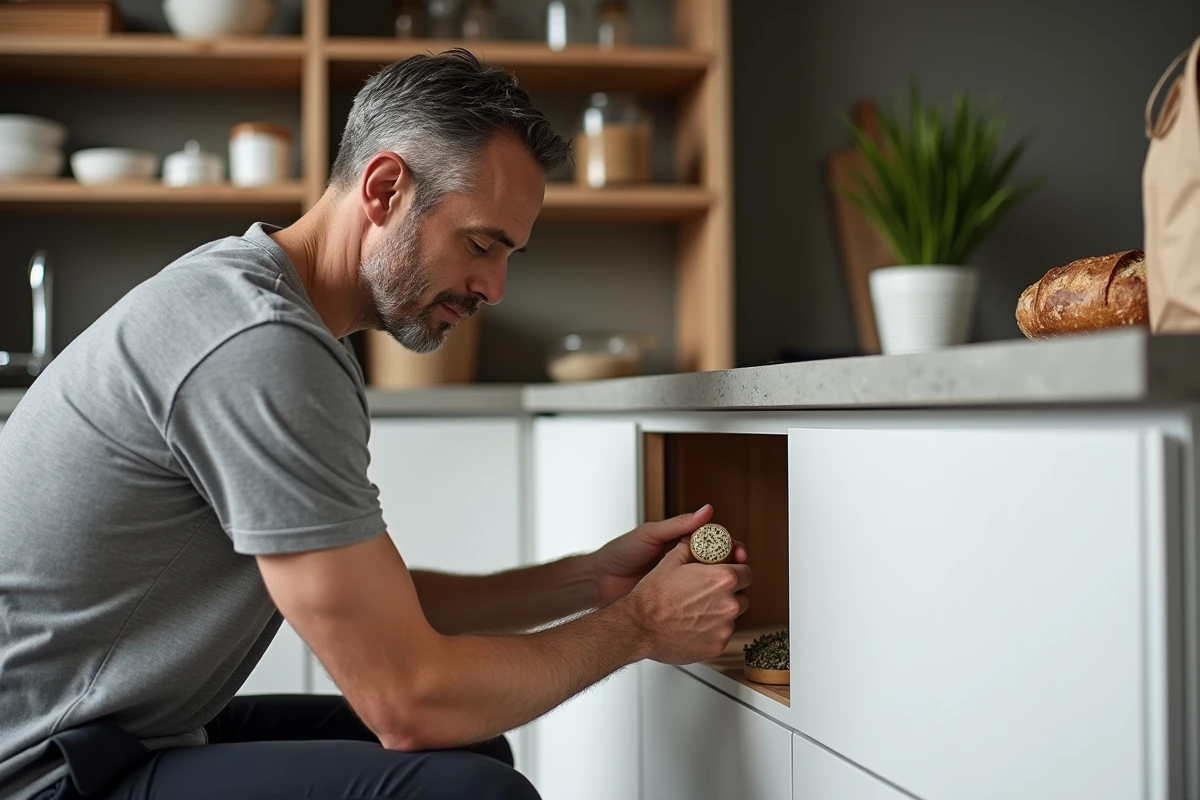
Place one trap per cupboard or storage area. If you capture several individuals within a few days, it is a signal to inspect each dry product, discard those with holes or suspicious dust, and apply a heat treatment to the others.
Pheromone traps can be easily found at garden centers or in specialized pest control stores. They work without insecticides, making them suitable for use in a kitchen.
Cupboard cleaning and airtight storage: the sustainable foundation
No natural method yields lasting results without a rigorous cleaning protocol. The bread weevil lays its eggs in corners, cracks, and flour residues accumulated at the bottom of shelves.
- Completely empty the cupboard and vacuum every corner, including door hinges and shelf joints.
- Clean all surfaces with white vinegar, which removes organic traces without leaving toxic residue.
- Systematically transfer your dry products into airtight glass or rigid plastic containers. Paper or soft plastic bags do not withstand the larvae’s mandibles.
- Inspect opened products that have been stored for more than a few weeks before putting them back.
Airtight storage cuts off access to food sources and prevents adults from laying eggs in new products. Combined with the systematic freezing of bulk purchases, this action reduces the risk of reinfestation to a very low level.
The bread weevil settles in because it finds ideal conditions: accessible food, stable temperature, quiet corners. Each individual natural measure has its limits, but the combination of heat treatment, olfactory repellents, monitoring traps, and airtight storage forms a coherent system that deprives the insect of any opportunity to reproduce.