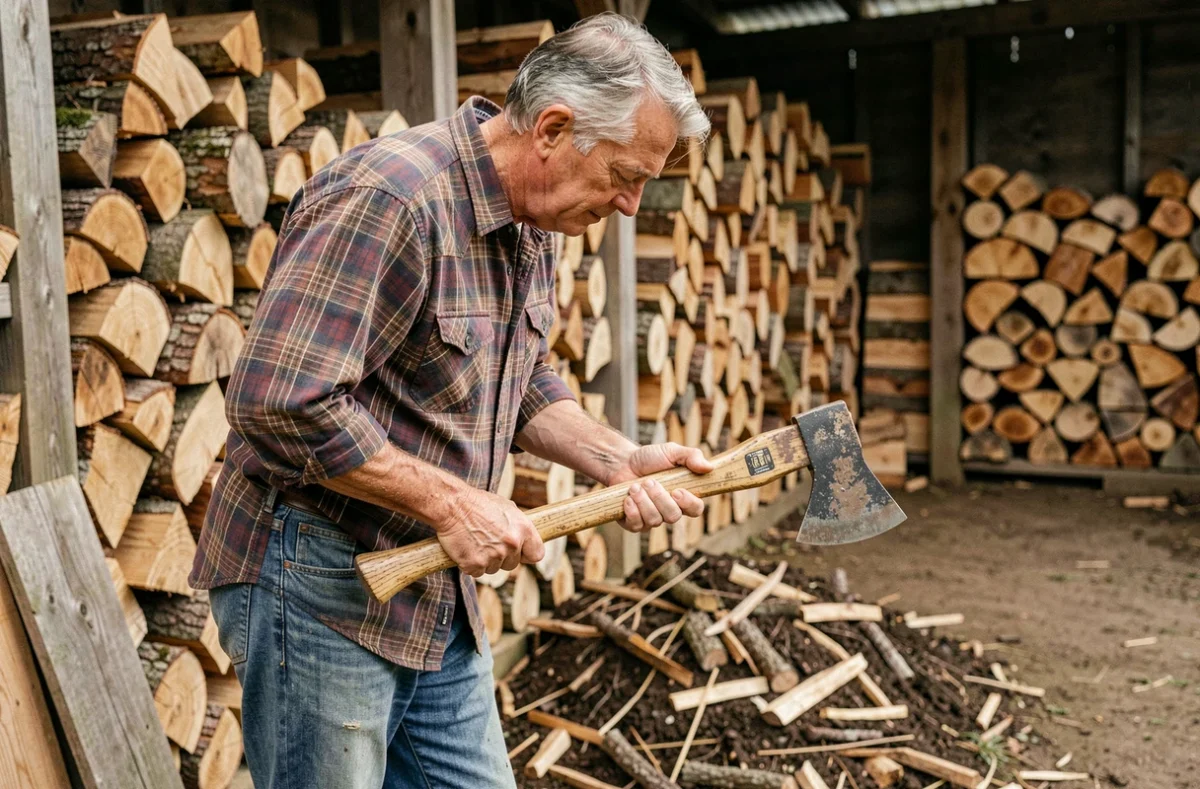
Selecting an axe for the garden or DIY involves weighing several technical parameters that interact: the head profile, total weight, handle material, and intended use. Comparing these criteria based on concrete data helps avoid an oversized purchase or, conversely, a tool that is too light for the actual task.
Head-handle balance: the parameter that product sheets minimize
Most selection guides focus on the type of axe (hatchet, maul, felling axe), then on the handle length. The often underestimated factor is the balance between the weight of the head and the length of the handle. A heavy head mounted on a short handle concentrates energy but requires a brief and tiring motion. A light head on a long handle generates speed but loses penetration power.
Before comparing models by category, it is useful to choose an axe well on Ta Maison Ton Jardin by considering this weight-length ratio, which directly affects comfort during a prolonged work session.
For common garden use (splitting medium-diameter logs, pruning branches), a tool with a head that does not exceed one-third of the total weight offers a manageable compromise. Beyond that, muscle fatigue increases faster than cutting efficiency.
Comparison of axe types by garden use
The table below compares the main types of axes used in gardening and DIY, according to the criteria highlighted in specialized guides and manufacturer recommendations.
| Type of axe | Main use | Typical head weight | Handle length | Knotted wood |
|---|---|---|---|---|
| Hatchet | Small pruning, camping, precision work | Light | Short (one hand) | Not suitable |
| Splitting axe (maul) | Splitting logs | Heavy | Long (two hands) | Suitable |
| Felling axe | Felling small to medium diameter trees | Medium to heavy | Long | Moderately suitable |
| Universal axe | Versatility for gardening and DIY | Medium | Medium | Occasional use |
The maul is distinguished by a thick wedge-shaped head. This geometry pushes the wood fibers apart instead of cutting them. For splitting knotted wood, the maul remains the most effective tool because its thick profile resists getting stuck in knots.
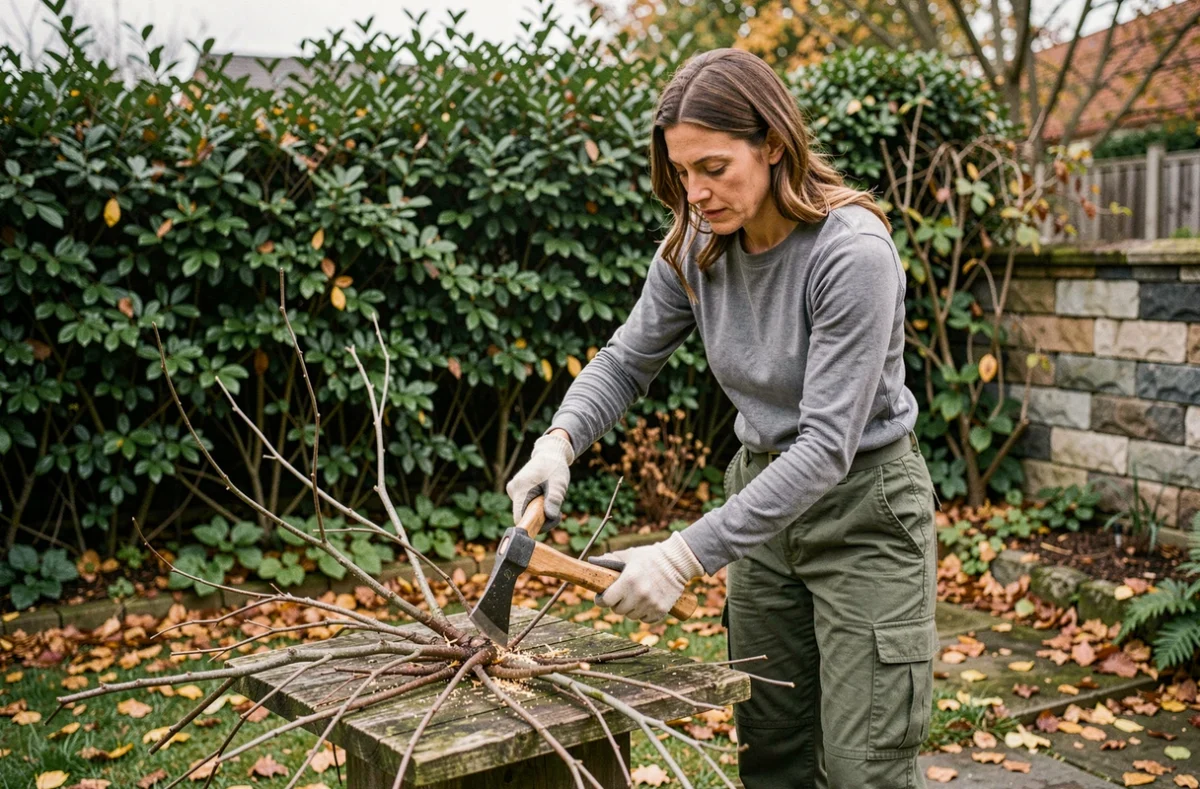
On the other hand, the hatchet is suitable for precision work: shaping stakes, preparing kindling, or pruning fine sections. Its short handle limits striking force but allows for fine control of the motion.
Handle material: wood, fiberglass, or composite
The choice of handle material is often presented as a simple question of durability against the elements. The reality is more nuanced.
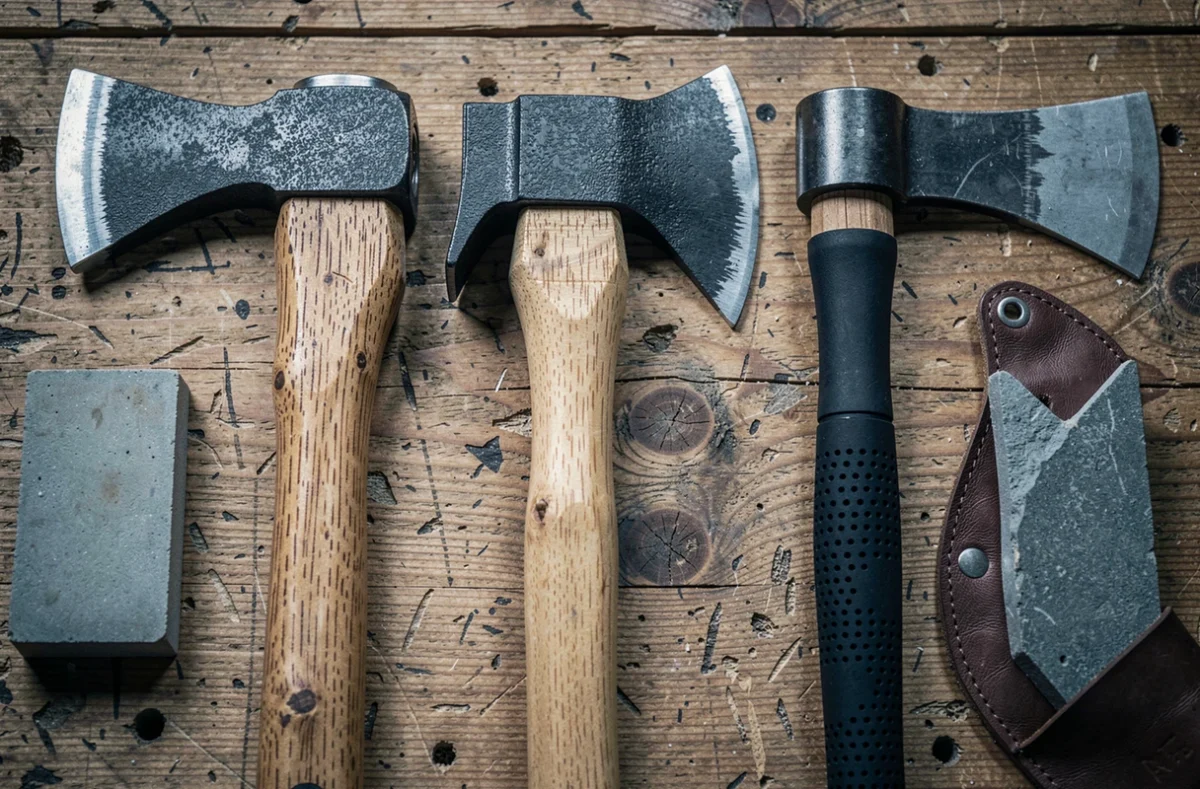
- The wooden handle (ash, hickory) absorbs vibrations well and is easy to replace. It requires regular maintenance: a treatment with linseed oil protects the wood from water and limits drying out.
- The fiberglass handle withstands humid conditions and does not splinter. Conversely, it transmits more vibrations to the wrist during repetitive use, which can increase joint fatigue during a long session.
- The composite handle often combines a synthetic core and a non-slip coating. It offers good mechanical resistance but is more difficult to replace in case of breakage.
For occasional garden use (a few hours per month), the handle material has little impact on comfort. For regular splitting or pruning work, vibration transmission and grip diameter are as important as water resistance.
Steel blade: hardness, sharpening, and axe maintenance
The steel of the blade determines the frequency of sharpening and shock resistance. Common garden axes use carbon steel, sometimes alloyed with chromium or vanadium to limit corrosion.
A harder steel retains its edge longer, but it is also more brittle in case of striking a hard knot or a foreign object (stone, nail in reclaimed wood). Softer steel absorbs shocks better, at the cost of more frequent sharpening.
For regular maintenance, a pass with a flat file or sharpening stone is sufficient. The sharpening angle varies according to use: a wide angle for splitting, a finer angle for precision cutting. Applying a film of oil on the blade after each use prevents oxidation, especially if the tool is stored in a shed exposed to moisture.
Safety and protective equipment: a simultaneous choice
Competing guides generally address safety as an appendix, after the tool selection. Feedback shows that protective equipment should be selected at the same time as the axe, not afterward.
Wood chips thrown during splitting reach speeds sufficient to injure an eye. A visor or anti-splinter safety glasses are the minimum. Suitable gloves, thick enough to absorb vibrations but flexible enough to maintain a firm grip, complete the setup.
In a professional context (landscaping, forestry), French regulations require employers to provide appropriate PPE for identified risks. Articles R. 4321-4, R. 4323-95, and R. 4323-106 of the Labor Code govern the provision, maintenance, and training for the use of this equipment.
For individuals, no comparable legal obligation applies, but the risk remains the same. Planning for glasses, gloves, and reinforced closed shoes at the time of axe purchase avoids working without protection “in the meantime.”
The choice of an axe boils down to three concrete trade-offs: the geometry of the head based on the wood to be worked, the handle material based on usage frequency, and the hardness of the steel based on the maintenance one is willing to undertake. These three parameters, combined with the right protective equipment, determine both the effectiveness and safety of each work session.