When a production is filmed on a set equipped with an LED wall and the backgrounds displayed on screen are generated by artificial intelligence, the shooting schedule changes, the set budget does too, and the final output no longer resembles what was achieved three years ago. TV series are absorbing these technological changes at a pace that now affects every stage of production, from writing to broadcasting.
Virtual production on LED wall: what it concretely changes on a series set
On the ground, virtual production primarily relies on a curved LED wall several meters long, controlled by a real-time engine, which replaces green screens and part of the physical sets. The case of House of David illustrates this shift well: according to Media Play News, season 1 was among the first productions from a major streaming service to use AI for final images.
The following season applied this same approach to the creation of backgrounds projected on the LED wall, marking a milestone in the integration of these techniques.
For a filming crew, the difference is immediate. Actors perform in front of a real-time visible environment, which alters the acting, lighting, and framing. Post-production touch-ups decrease because the captured image already incorporates the set. Time is saved on outdoor movements, and weather conditions no longer block the schedule.
For those closely following these developments, you can discover the tech section on Série Live where these topics are regularly documented.
Generative AI applied to TV series: from script to broadcast pixels
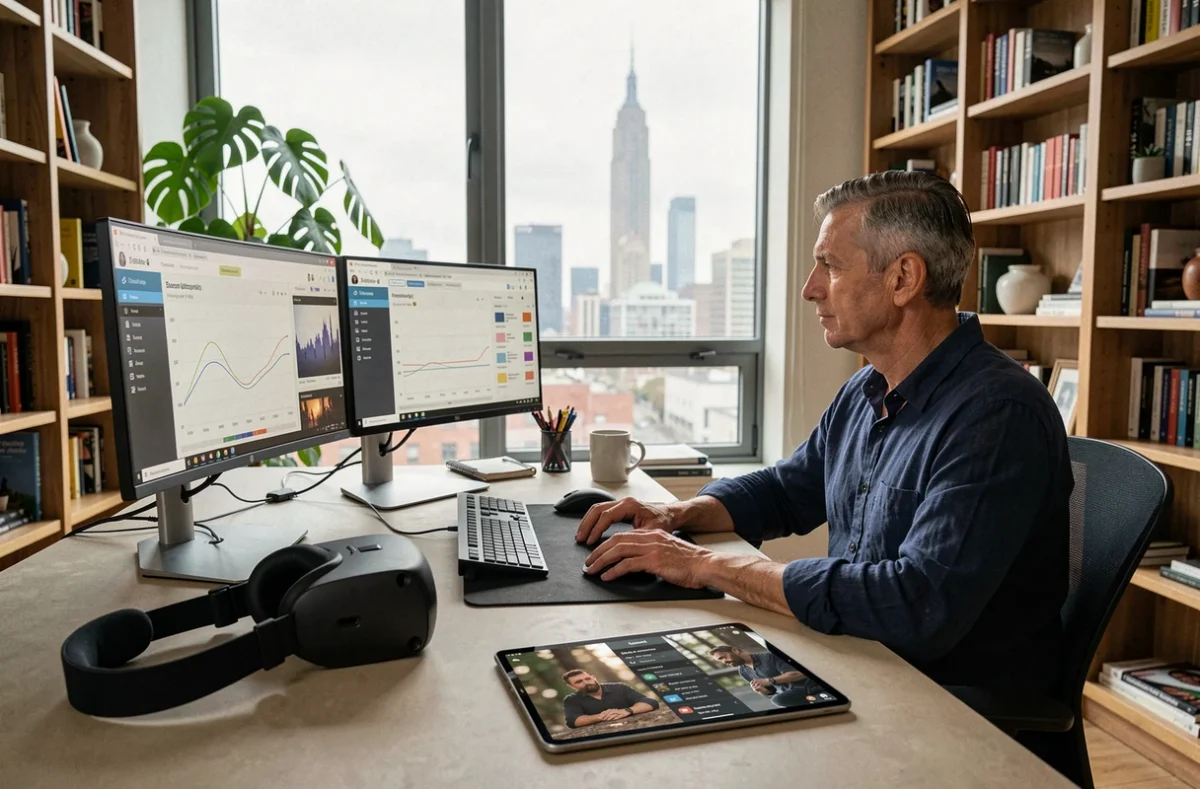
Artificial intelligence is no longer limited to suggesting dialogues or speeding up editing. It now produces visual content that arrives on screen without human retouching on each pixel. This is a change in nature, not just in degree.
Fully AI-generated series in China
The Chinese case is the most radical. The series Après Journey to the West has been presented as the first fully AI-generated long Chinese series, without real actors, with simultaneous broadcasting on Hunan TV and MangoTV. The episodes are produced, submitted to regulatory control, and gradually broadcast, breaking the classic schedule where post-production precedes broadcasting by several months.
The production-broadcast cycle compresses when AI takes over complete visual production. We move from a sequential model to a nearly continuous model, raising new questions about quality control and artistic supervision.
Backgrounds and visual effects generated for live series
In productions with real actors, generative AI intervenes on specific layers: creating digital environments, extending sets, generating crowds or background elements. The boundary between what falls under traditional VFX and what is produced by a generative model becomes blurred for the viewer. Feedback on this point varies among professionals interviewed, with some believing that the quality remains below that of artist work on close-ups.
Digital replicas of actors and regulation in the United States
Using an actor’s face or voice without their physical presence on set has been technically possible for several years. What is changing is the legal framework. The TV and film agreement negotiated by SAG-AFTRA in the United States now more strictly regulates the use of digital replicas of performers.
Specifically, a production that wants to digitally recreate an actor for a scene must obtain explicit consent, framed by contract, with specific compensation conditions. This is no longer a gray area. For series that run multiple seasons with large casts, this constraint weighs on the budget and legal schedule as much as on the technical pipeline.
Screens and broadcast formats: what changes for series viewers
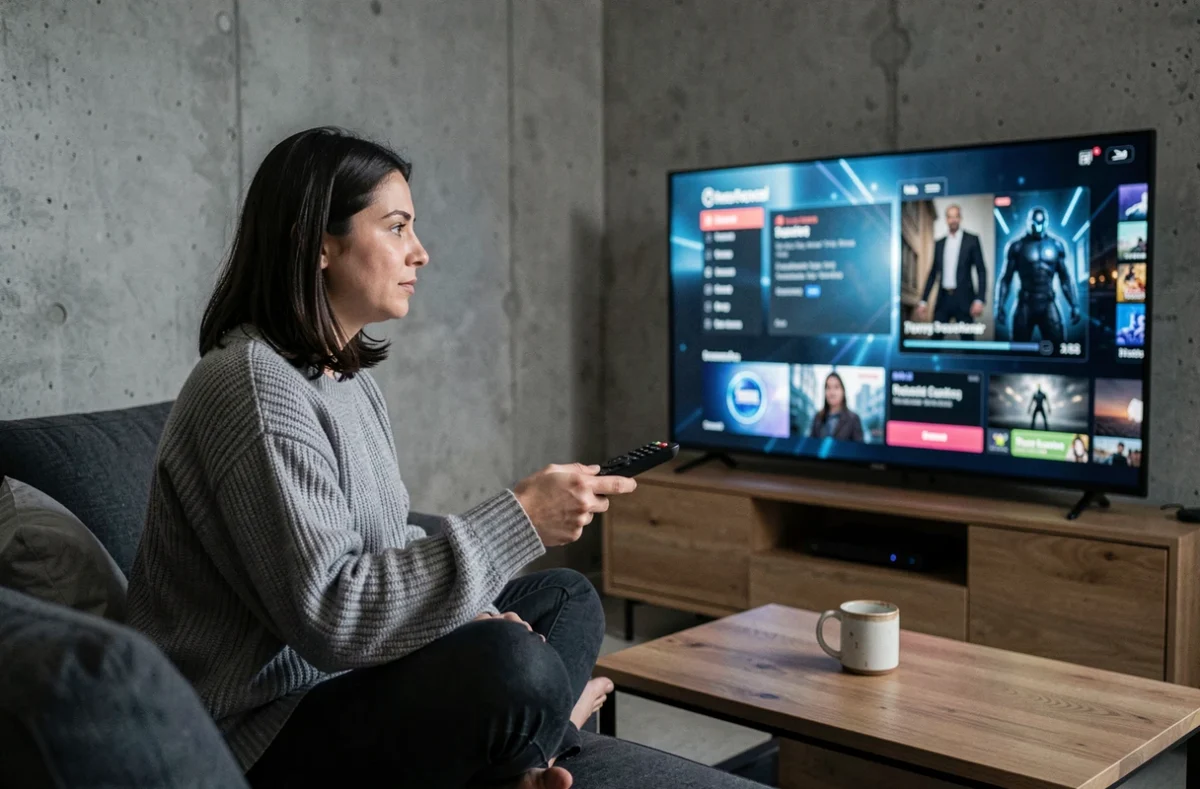
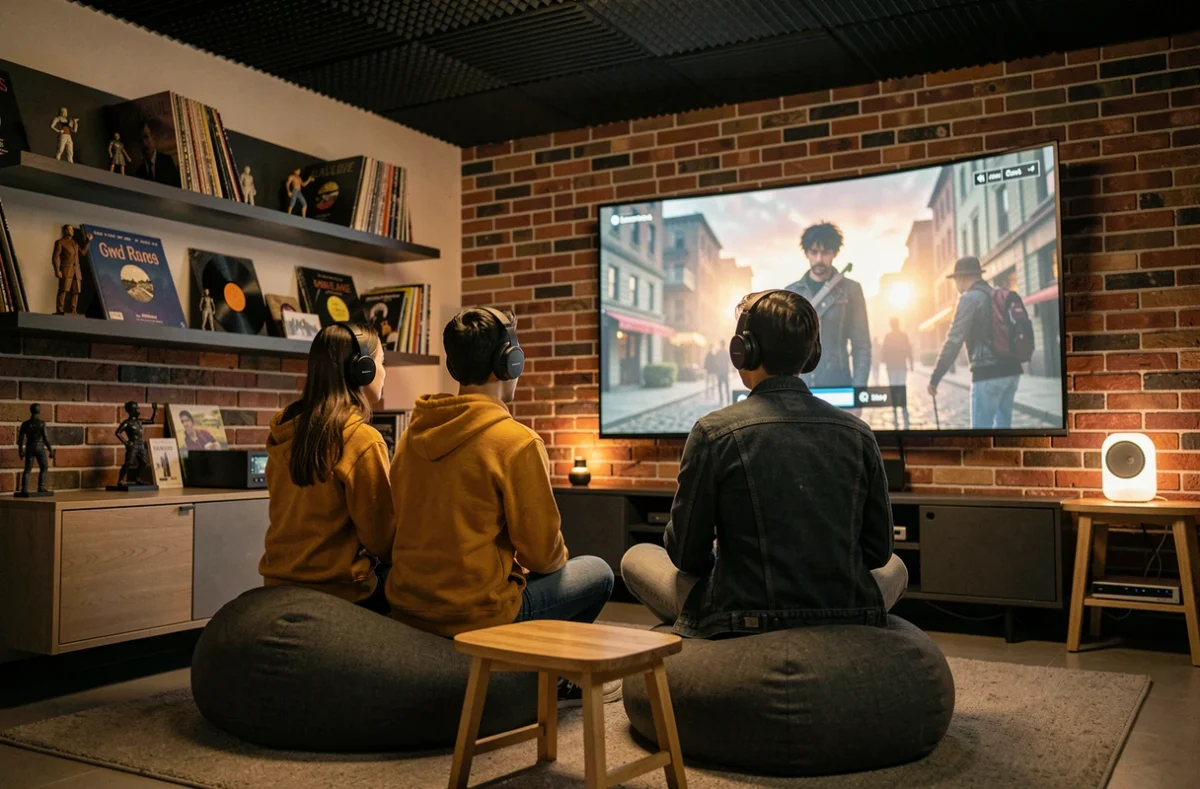
The production of a series does not stop at the final master. The way the image reaches the viewer is also evolving. Television manufacturers are now integrating AI-powered processors that adapt HDR rendering, video noise management, and color calibration in real-time based on the displayed content.
- AI upscaling: recent televisions analyze each image to enhance perceived definition, which directly benefits series shot in native resolution lower than 4K
- Anti-reflective technologies on OLED panels: Samsung has introduced a range of OLEDs incorporating anti-reflective treatment, improving the readability of dark scenes, common in genre series (thriller, fantasy)
- Integrated spatial audio: soundbars and built-in processors simulate immersive sound without complex installation, making Dolby Atmos mixes of series more accessible in a standard living room
The streaming broadcast format is also pushing platforms to offer more efficient adaptive streams. HDR content becomes a differentiating argument between services, and the perceived audio-video quality directly influences viewers’ subscription choices.
Environmental oversight and carbon measurement tools in production
One aspect rarely covered in articles about series innovation: measuring the carbon footprint of shoots is starting to be equipped. Software solutions allow real-time tracking of a set’s energy consumption, team transport, and the environmental cost of cloud data storage.
These tools do not change what we see on screen, but they alter how a production is financed and validated. Several European broadcasters now condition part of their funding on the provision of a detailed carbon report. The environmental constraint becomes a technical production parameter, on par with budget or schedule.
The accumulation of these technological layers (generative AI, virtual production, legal framework on digital replicas, smart screens, carbon tools) reshapes the value chain of TV series. Each link absorbs a dose of new automation or regulation, and it is the articulation between these building blocks that determines the form of the series we will watch in the coming seasons.