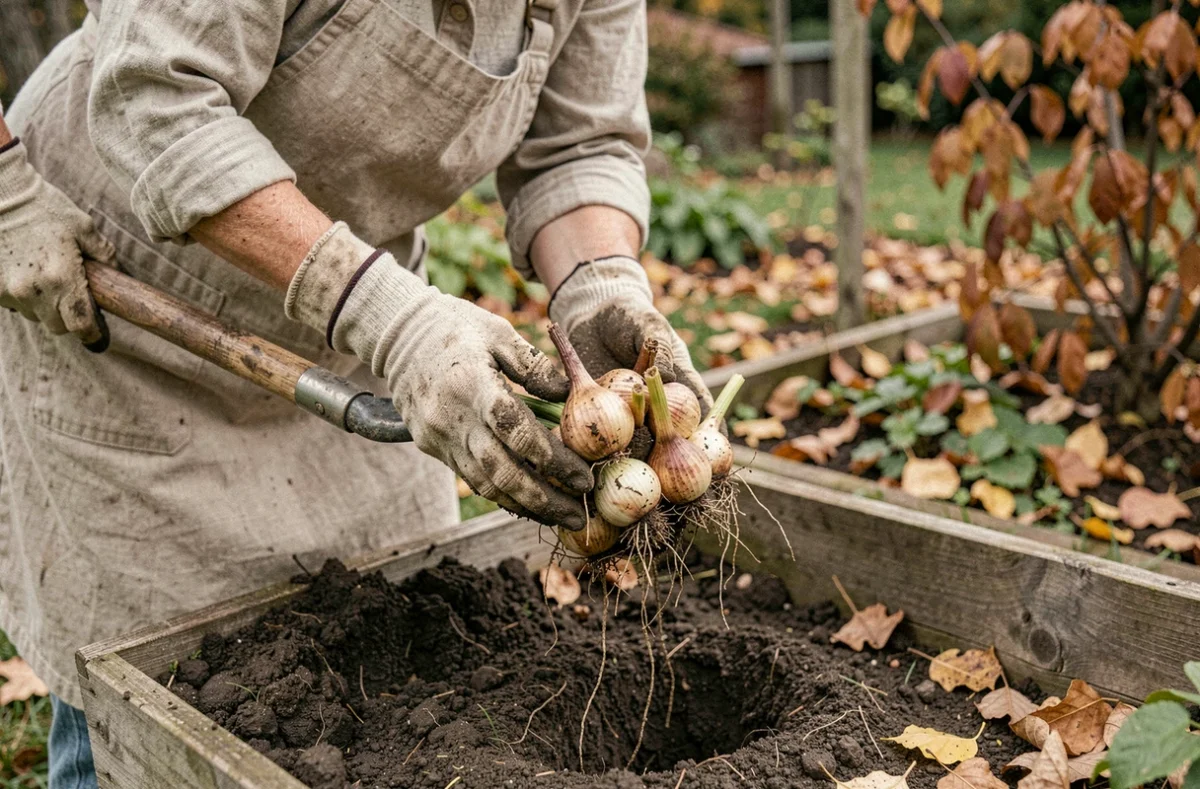
Lily bulbs are reserve organs made up of fleshy scales, lacking a protective tunic unlike tulips or daffodils. This anatomical feature makes them more sensitive to desiccation than to frost. The question of winter digging arises every autumn, but the answer depends less on a universal rule than on the type of soil, the cultivation method, and the variety planted.
Anatomy of the lily bulb and actual vulnerability to cold
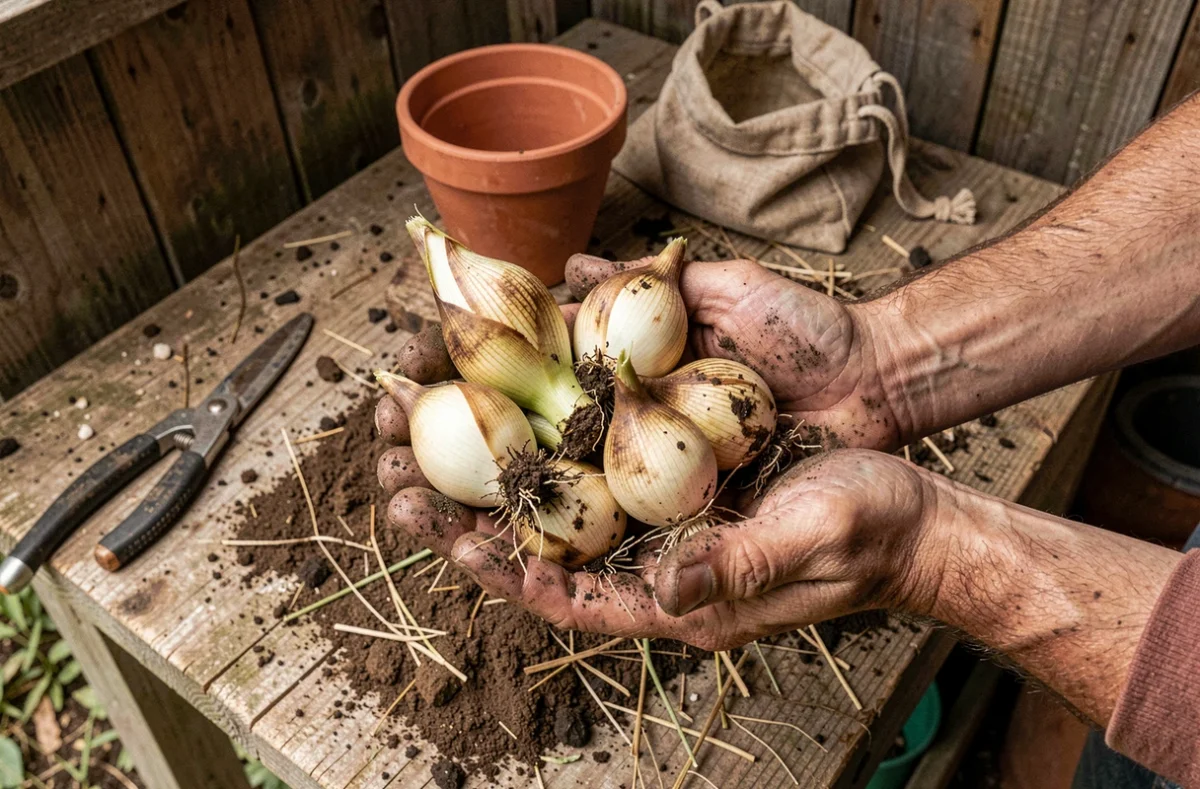
A tulip bulb has a dry covering that protects it during storage. The lily bulb, on the other hand, has interlocking scales without an external tunic. Exposed to the open air, these scales quickly lose their moisture and dry out within a few days.
This structure explains why a lily bulb that has been dug up and then poorly stored deteriorates faster than a bulb that remains in the ground. Cold alone is not the main issue for most hardy varieties. According to Nature & Garden, the main winter risk is excess water, not frost.
A heavy, clayey soil that retains water in winter creates ideal conditions for scale rot. Digging does not resolve this structural flaw in the soil: if drainage remains poor, bulbs replanted in spring will suffer the same fate the following autumn. To learn more about L’Atelier du Bricolage, the topic is addressed from a practical angle with concrete cases.
Waterlogged soil or drained soil: the criterion that settles the debate
The Royal Horticultural Society recommends planting hardy lily bulbs in September-October, which implies a perennial cultivation in open ground. This recommendation applies to soils that do not remain waterlogged for several consecutive weeks.
To assess whether your bulbs can stay in place, a simple test is sufficient: after heavy rain, observe how long water stagnates at the location of your lilies. If it disappears within a few hours, drainage is correct. If it persists for more than a day, the risk of rot increases significantly.
Improve drainage rather than dig up
Adding gravel or coarse sand to the bottom of the planting hole, raising the area with a light soil addition, or planting on a mound: these interventions provide more lasting protection than annual digging. A lily bulb planted in well-drained soil can remain in place for several years without intervention.
Systematic digging every autumn exposes the scales to repeated handling, with a risk of mechanical injury that opens the door to fungal infections. The less a healthy bulb in good soil is handled, the better it thrives.
Potted lilies: a special case that justifies repotting
Container cultivation follows a different logic. The limited substrate volume degrades over the seasons: it compacts, loses its drainage capacity, and accumulates mineral salts. The roots eventually occupy all the available space.
According to Nature & Garden, a potted lily can be kept for several seasons without digging as long as the container is placed out of reach of winter rains and the substrate is kept barely moist. Repotting becomes preferable when the substrate degrades or when the roots saturate the volume.
- Place the pot in a cool location, out of direct frost, such as an unheated garage or cellar
- Reduce watering to a minimum to avoid completely drying out the scales, without ever waterlogging
- In spring, repot in fresh, well-draining substrate if the pot has been in cultivation for more than two seasons
Completely digging out the bulb from the pot is not always necessary. A simple repotting with substrate renewal is sufficient in most cases.
Division of lily clumps: when digging really makes sense
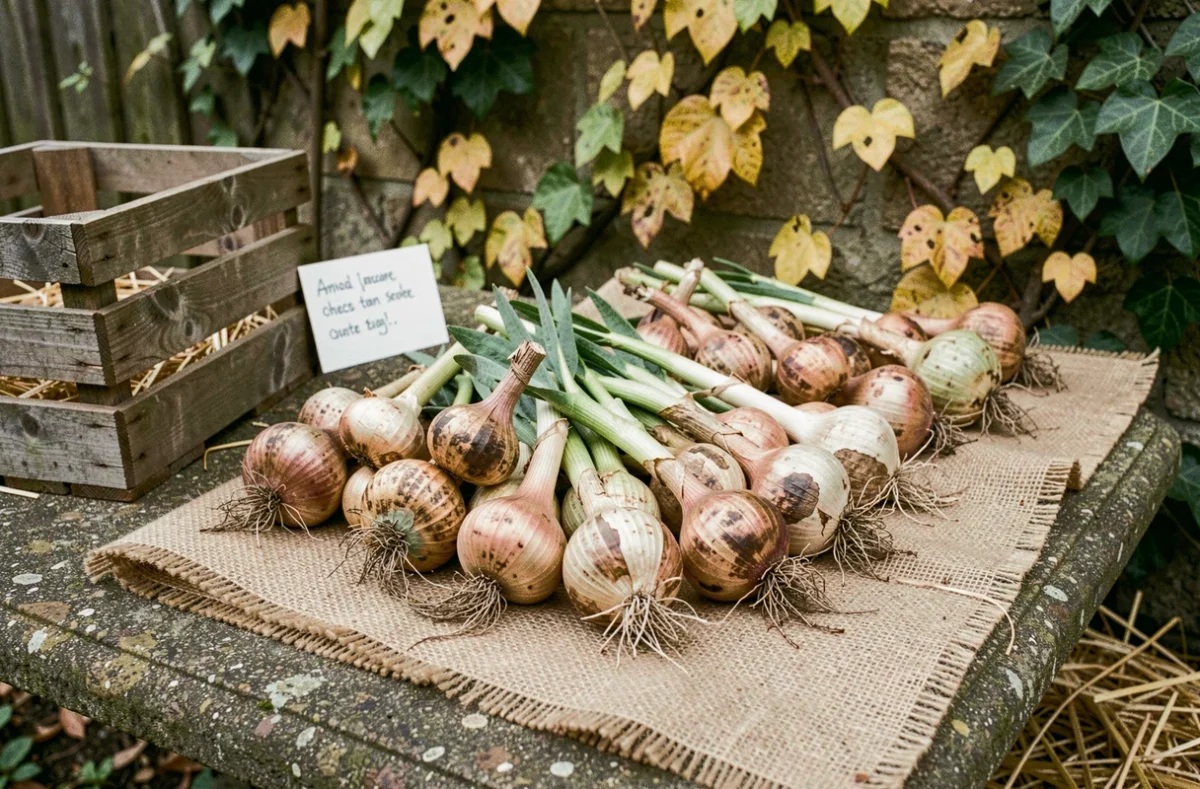
After several years in open ground, lily bulbs produce bulbils – small secondary bulbs that form around the mother bulb. The clump becomes dense, flowering decreases, and the stems thin out. This is a sign that digging here serves to divide, not to protect.
This operation is preferably carried out in autumn, once the foliage has completely yellowed and dried. Complete yellowing of the foliage indicates that the bulb has finished replenishing its reserves through photosynthesis. Cutting the still green stems would deprive the bulb of some of its nutrients for the following season.
Handling and replanting
Carefully separate the bulbils from the mother bulb. Any injury to the scales constitutes a potential entry point for fungi responsible for basal rot, particularly Fusarium. Replant immediately in prepared soil, without allowing the bulbs to dry out in the open air.
- Dig wide enough not to damage the still-present basal roots
- Inspect each bulb: discard those with soft spots or a smell of decomposition
- Replant at a depth of about two to three times the height of the bulb, in enriched and draining soil
- Space the bulbils to allow them room to develop without immediate competition
Less hardy varieties and local climate: legitimate exceptions
Some eastern or trumpet varieties do not tolerate the harsh winters of regions north of the Loire well. For these lilies, winter digging remains a justified precaution if the soil temperature regularly and durably drops below the variety’s tolerance threshold.
Storage must then meet strict conditions: cool and stable temperature, slight humidity maintained around the scales (peat or vermiculite barely moist), and darkness. A bulb stored too dry will lose its outer scales. A bulb stored too wet will rot.
In practice, a thick mulch applied to the planting area often suffices to protect the bulbs in regions where frosts remain moderate. Mulching insulates the soil without imposing the delicate handling of digging and storage.
Thus, digging up lily bulbs is not a seasonal automatism. Well-drained soil, appropriate mulching, and spaced division every few years cover the vast majority of situations. Reserving digging for degraded potted lilies, overly dense clumps, and varieties truly sensitive to frost avoids manipulations that, paradoxically, weaken the bulbs more than they protect them.