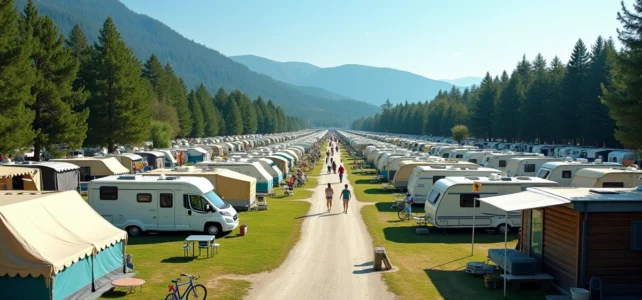
When thinking of camping in Europe, one often imagines a site with a few hundred pitches by a lake or beach. However, some sites far exceed this scale, with over 1,000 pitches, water parks, entertainment, and mobile home villages that resemble small towns. Understanding what distinguishes these mega-campings helps in choosing a destination, as well as planning the journey to get there.
Mega-campings in Europe: what size changes for the traveler
A camping site with over 1,000 pitches does not operate like a family camping site with 200 pitches. The organization is industrial, with integrated supermarkets, several restaurants, children’s clubs by age group, and water complexes with slides.
This scale also alters the experience: there are more activities, a bar open late at night, and varied accommodations (bare pitches, mobile homes with terraces, lodges). In return, the density can be surprising during peak season.
Since 2023, several of these structures have grouped together in pan-European groups like ECG, Vacanceselect, or Capfun. For travelers, this translates into common loyalty programs and more uniform service standards from one country to another. A mobile home booked in Croatia through one of these groups will offer a level of comfort comparable to that of a camping site in the same network in France or Italy.
Before booking, it is useful to consult the ranking of the largest campings in Europe to identify sites that meet your expectations in terms of size, services, and location.
Reaching the large campings in Europe without a car
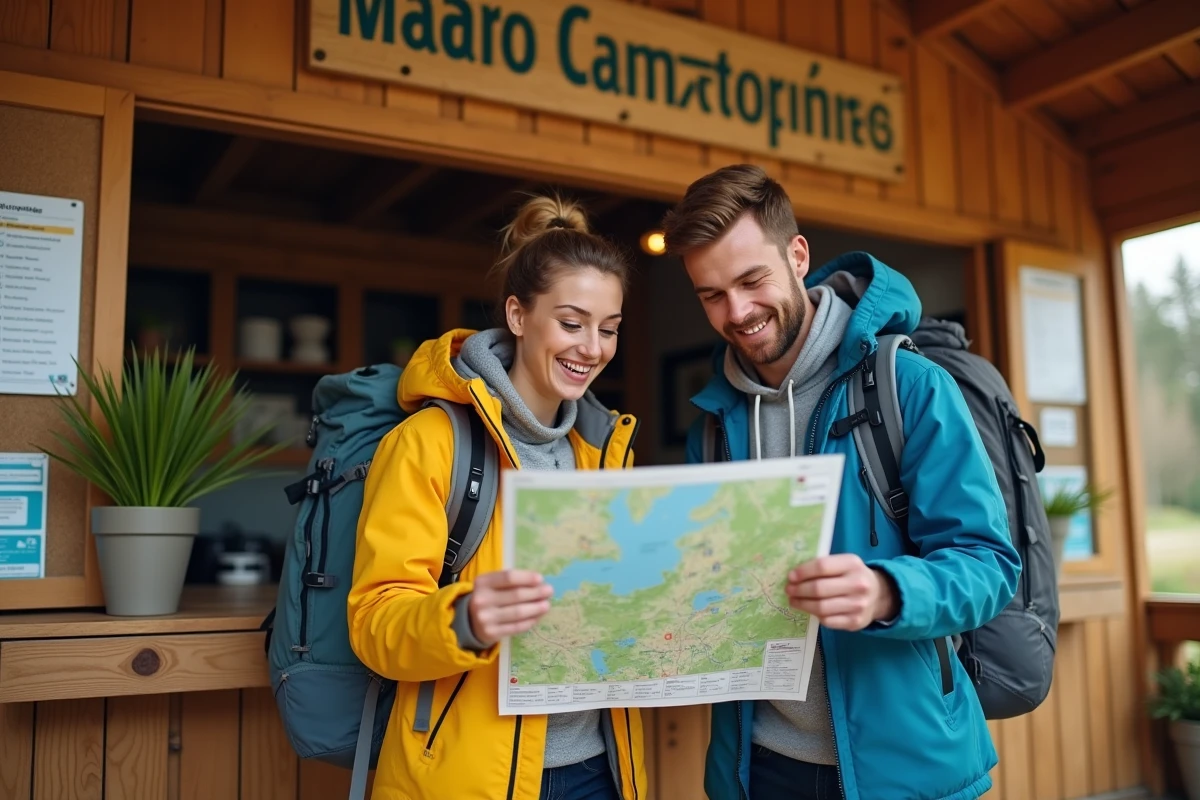
Have you noticed that most camping guides assume you arrive by car? Mega-campings, precisely because they cater to an international clientele, are starting to offer alternatives.
From the 2023-2024 season, direct shuttles from TGV stations or regional airports are being developed. The campings on the Italian Adriatic coast and the Spanish Costa Brava are among the pioneers. Some have also established partnerships with long-distance bus companies.
For a camping site located in Veneto (northern Italy, around Venice), the typical journey looks like this:
- A flight or train to Venice-Mestre, then a shuttle organized by the camping or a regional bus to the coast
- A drive from France via the highway, with a toll to expect in Italy and sometimes in Switzerland if you cross the Alps
- A FlixBus to the nearest city, then a local transfer by bus or taxi
For Spanish campings on the Costa Brava or Costa Dorada, access by high-speed train to Barcelona or Girona remains the most convenient. After that, local transport varies by establishment.
What to check before booking transport
Contact the camping directly to confirm the shuttles. Their availability depends on the season and occupancy rate. Shuttles generally only operate in July and August. In low season, plan a backup solution.
Ecological transition of mega-campings: a central argument
The size of these campings raises an obvious question: what environmental impact does a holiday village that consumes as much water and electricity as a small town have? The answer is evolving quickly.
Driven by the European Green Deal and the rise of labels like EU Ecolabel or Green Key, several large campings have invested in photovoltaic parks and water recovery systems to supply their water parks. Some claim to cover almost all of their electricity needs in peak season from solar panels, which is becoming a commercial argument displayed right on the homepage.
This shift is not only about energy. Heating networks are gradually replacing gas boilers to heat pools out of season. Campings that obtain these certifications also gain visibility in European rankings (Camping.info Awards, ACSI Awards), which feeds a virtuous circle.
Criteria for comparing the largest campings in Europe
A ranking by gross size (number of pitches) is not enough. Two campings of comparable size can offer radically different experiences. Here are the criteria that really matter to distinguish these giants:
- The density of pitches per square meter: a huge but cramped camping loses its advantage. Check the total area of the site, not just the number of pitches
- The diversity of accommodations: bare pitches for tents and campervans, mobile homes with terraces, lodges, cabins. The broader the choice, the more the camping attracts varied profiles
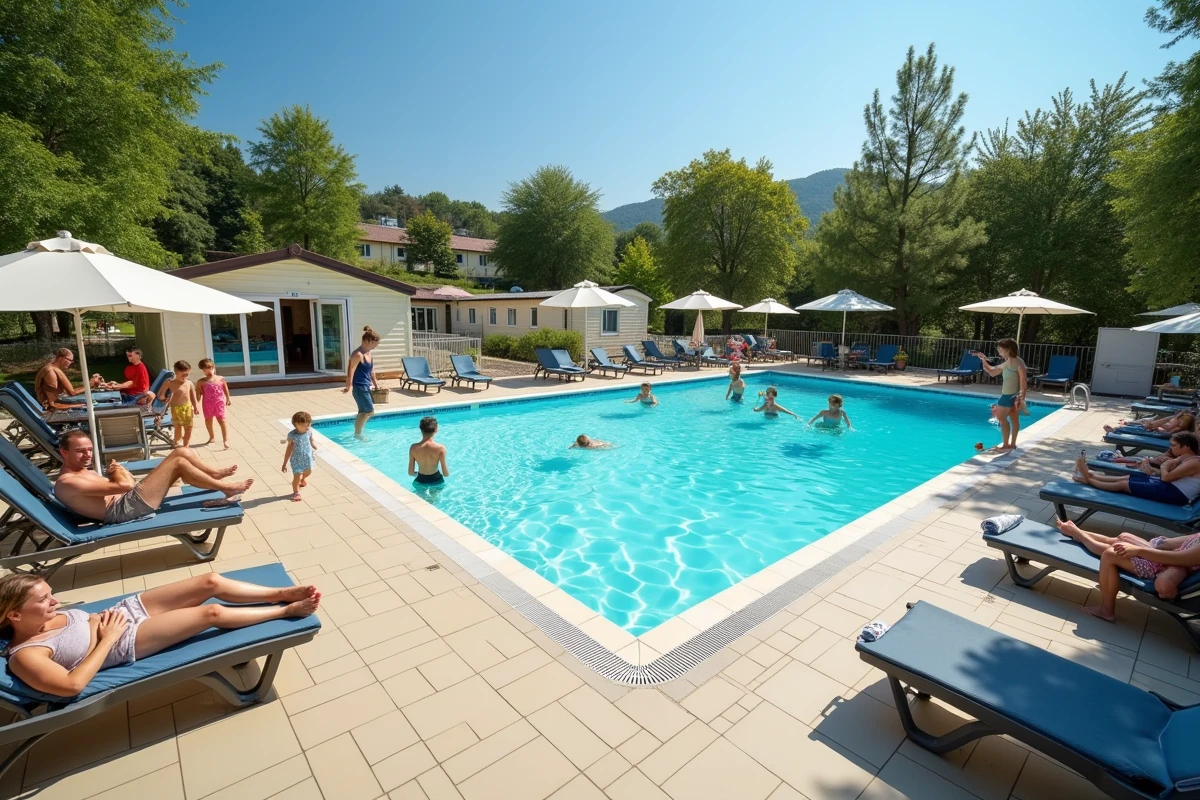
- Access to water facilities: heated pool, slide, private beach, or direct access to the sea. This is often the primary criterion for families with children
- The entertainment program and children’s club: some campings offer shows every evening and a club by age group, while others limit themselves to a few activities in peak season
- The value for money in low season: mega-campings have very variable rates depending on the weeks. Booking in June or September can halve the price
Countries to watch for the upcoming seasons
Recent rankings show a marked increase in campings in Eastern Europe and the Balkans. Croatia, already well represented, sees its campings regularly rising in European rankings. Slovenia and Montenegro are also starting to appear, with prices still significantly lower than those in France or Italy for comparable services.
The choice of a mega-camping depends as much on the journey as on the site itself. A five-star camping in Croatia loses its appeal if the journey to get there takes two days and three connections. Cross-referencing the size of the camping, its facilities, and its accessibility remains the most reliable method to avoid disappointments.