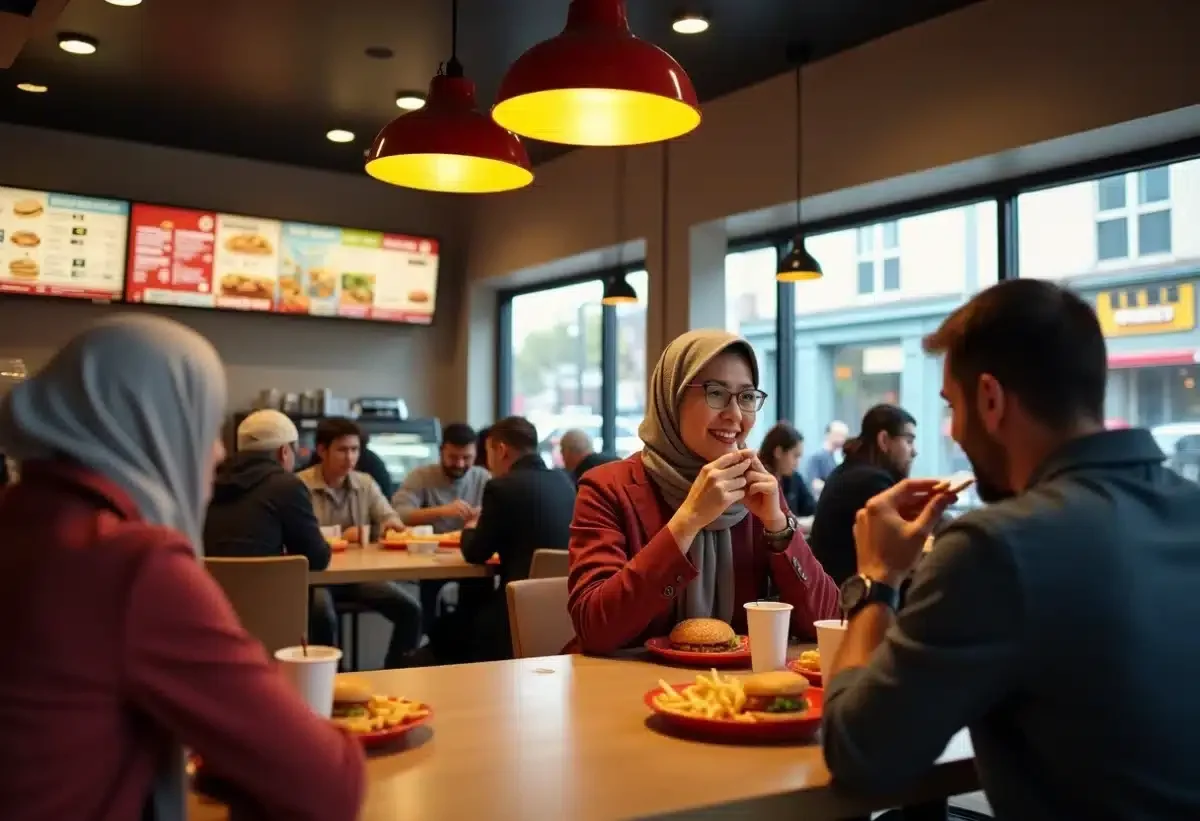
Fast food giants are turning to halal to attract a more diverse clientele. This movement marks an evolution in the industry, where the demand for food options compliant with religious practices is on the rise. Muslim consumers represent a growing market, and their purchasing power is no longer going unnoticed.
To respond to this trend, giants like McDonald’s, KFC, and Subway are incorporating halal menus in some of their franchises. These initiatives aim to offer greater inclusivity and capture a previously neglected market share. A strategy that could well redefine the standards of fast food.
Reasons for Diversification Towards Halal
Major fast food chains are adopting halal standards for several reasons. First, the demand from Muslim consumers is putting increasing pressure on food companies. These consumers are looking for options that comply with their religious practices, and businesses can no longer ignore this expanding market segment.
The growth of the halal market is another determining factor. In France, the Muslim population represents a significant share of food consumption. This market is experiencing strong growth, with forecasts for continued expansion. Food companies, aware of this potential, are diversifying their products to include halal options.
Companies like McDonald’s, with its ‘McDonald’s halal’ initiative, are emblematic examples of this trend. They are adjusting their menus to meet these new expectations. This strategic choice not only captures a loyal clientele but also projects an image of inclusivity and diversity.
In summary, the main motivations behind this diversification are:
- Increased demand from Muslim consumers for products compliant with their religious practices.
- Sustained growth of the halal market, offering new economic opportunities.
- Adoption of halal standards by food companies to meet the specific needs of this market segment.
These elements show how and why fast food giants are taking this direction. The integration of halal products into their offerings could well redefine the standards of the food industry in France and beyond.
Impacts on the Market and Consumers
The rise of halal products in major chains is transforming the food market. The increase in the variety of halal products available offers more choices to consumers. This diversification is noticeable in the menus of franchises, street food-style restaurants, and even on delivery platforms like Uber Eats.
Changing Consumption Habits
Consumption habits are evolving with an increased preference for halal products. Consumers, whether Muslim or not, are turning to options perceived as more ethical and compliant with strict standards. This trend is changing eating behaviors, with a significant rise in demand for halal products.
Adaptation of Companies
Companies are adapting to capture a larger market share. They are investing in halal certifications and adjusting their supply chains. This adaptation, although costly, is seen as a strategic investment. Fast food franchises are not alone in this approach; independent restaurants and street food chains are also following this trend.
Impact Table
| Impact | Description |
|---|---|
| Increased Variety of Products | Menus are increasingly incorporating halal options. |
| Changing Consumption Habits | Increased preference for products perceived as ethical and compliant. |
| Adaptation of Companies | Investment in certifications and adjustments to supply chains. |
The impacts are multiple and mark a significant evolution in the sector. Consumers benefit from this diversification, while companies find new opportunities to grow in a rapidly changing market.