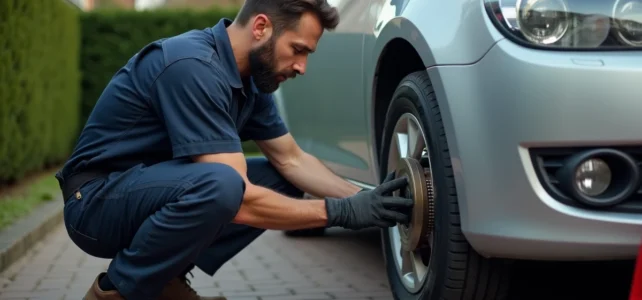
Home automotive repair relies on a more demanding technical and regulatory framework than what connection platforms suggest. A mobile mechanic operates without a lift, without a pit, and often without access to a compressed air network. These constraints determine the actual scope of services that can be performed at a private residence.
Technical constraints of a mechanical intervention without a workshop
Working on the ground or on jack stands limits operations to those that do not require high torque in a vertical position. Replacing brake pads, performing an oil change, or changing a battery are well-suited to the mobile format. However, any intervention on the running gear or gearbox requires a lift, which excludes these services from the home scope.
Electronic diagnostics, on the other hand, does not suffer from this limitation. An OBD2 scanner works just as well in a parking lot as in a garage. We observe that the majority of home interventions begin with an engine diagnosis, followed by an on-site quote.
The management of used fluids poses a concrete problem. A home mechanic must transport used oil, coolant, or brake fluid to an approved collection center. The Ministry of Ecological Transition reminds us that the traceability of these waste materials is subject to more systematic checks during disputes or accidents. A serious service provider provides a waste tracking slip, even for an intervention at a private residence.
Players like Mécamobile organize their routes to incorporate this collection, distinguishing an organized network from an independent mechanic working without a recovery circuit.

Home repair and technical inspection: the link with low emission zones
Low emission zones change the nature of requests addressed to mobile mechanics. ADEME reports, in its report on the initial feedback from low emission zones, an increasing share of interventions related to bringing vehicles into compliance before technical inspection.
NOx sensors, EGR valves, and particulate filters are among the most requested parts for preventive replacement. A vehicle classified as Crit’Air 3 or 4, banned from circulation in certain metropolitan areas, can regain temporary access after restoring its pollution control system, provided that the technical inspection validates the intervention.
This type of home service meets a specific need: the owner of an older vehicle, often without alternative mobility solutions, cannot always go to a garage. The mobile mechanic intervenes on-site for part replacement, after which the vehicle is taken to a technical inspection at an approved center.
Technician qualification and traceability of parts
European regulatory pressure pushes for increased traceability. In the event of a failure noted during the technical inspection after a repair, the mobile technician must justify the origin of the parts and their qualification. We recommend systematically checking that the mechanic has a professional qualification certificate (CQP) or an equivalent diploma in automotive mechanics.
Standard commercial pages almost never mention this point. The invoice must include the exact reference of each part, the provider’s SIRET number, and the applicable warranty mention.
Routine maintenance at home: operations to prioritize
Not all services are equal in the mobile format. Some operations offer an optimal quality/time ratio, while others create more complications than they resolve.
- Engine oil changes with filter replacement remain the most common and best-suited intervention for home service, provided that the mechanic has a compliant recovery tank and a stock of filters compatible with the most common engines.
- Replacing front brake pads and discs can be done on jack stands in less than an hour for an experienced technician, with standard tools.
- Electronic diagnostics coupled with clearing warning lights (after resolving the issue) represents a high-value service, as it avoids a trip to the dealership for an operation that rarely takes more than thirty minutes.
- Battery replacement, including on vehicles equipped with a start-stop system requiring a reset via a scanner, is perfectly suited to the home format.
Operations to avoid in mobile service: any intervention on the air conditioning circuit (regulated refrigerant handling), clutch replacement, or bodywork requiring a paint booth.
Electric and hybrid vehicles: a new segment for the mobile mechanic
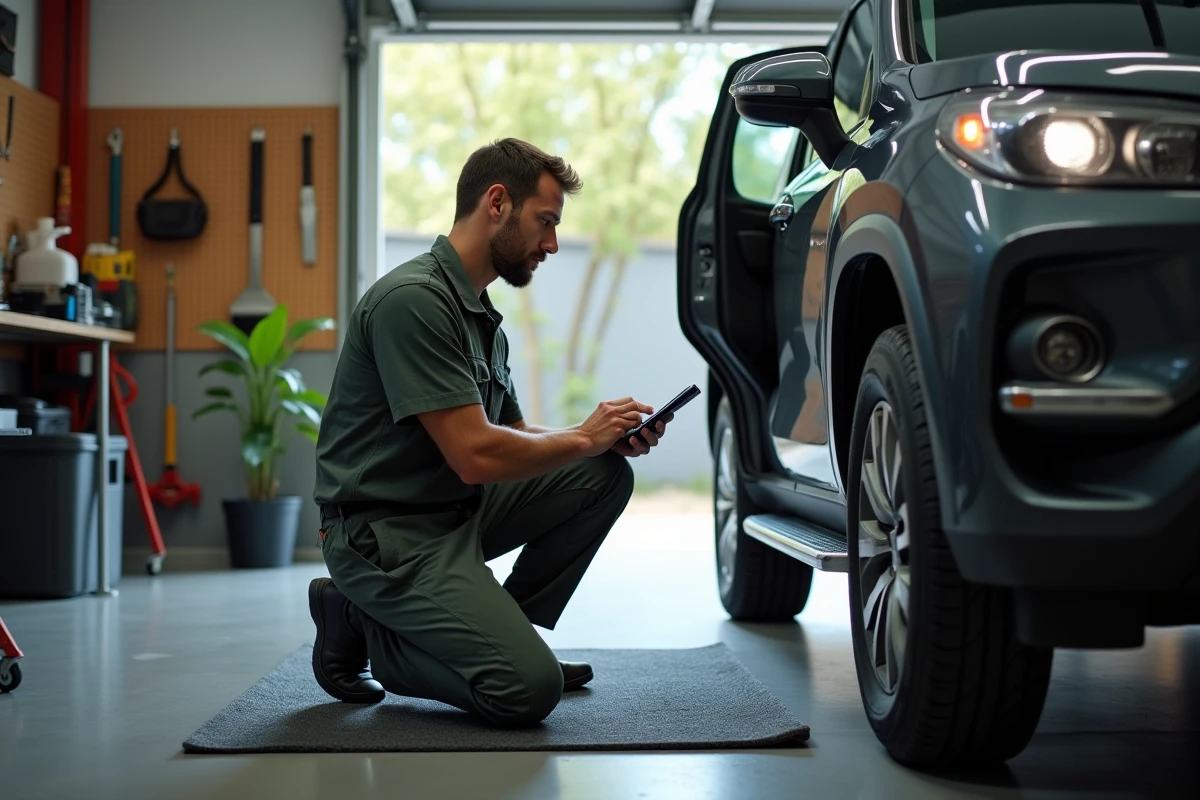
Since 2023, several home mechanics networks have expanded their offerings to electric and hybrid vehicles. The scope remains limited by specific safety constraints: any intervention on the high voltage circuit requires a B2VL electrical certification, distinct from standard qualifications in automotive mechanics.
Services that can be performed at home on an electric vehicle mainly include replacing brake pads (wear is slower due to regenerative braking, but replacement is necessary in the long run), tire rotation, diagnostics via OBD port, and replacing the 12V auxiliary battery.
What changes in the diagnostic approach
On a thermal vehicle, diagnostics often start with an engine listen. On an electric vehicle, the approach is entirely digital. The mobile mechanic must have a scanner compatible with the manufacturers’ proprietary protocols, which represents an investment that not all independents can afford.
Structured networks pool these tools and train their technicians on the specifics of each brand. This point differentiates a professional home automotive repair service from a craft-based offering.
The mobile electric segment remains marginal in volume, but its growth mechanically follows that of the fleet. Electric vehicle owners, often accustomed to digital services, more easily adopt online appointment scheduling and interventions without going to a workshop. Mobile mechanics are becoming a natural maintenance channel for this type of driver.