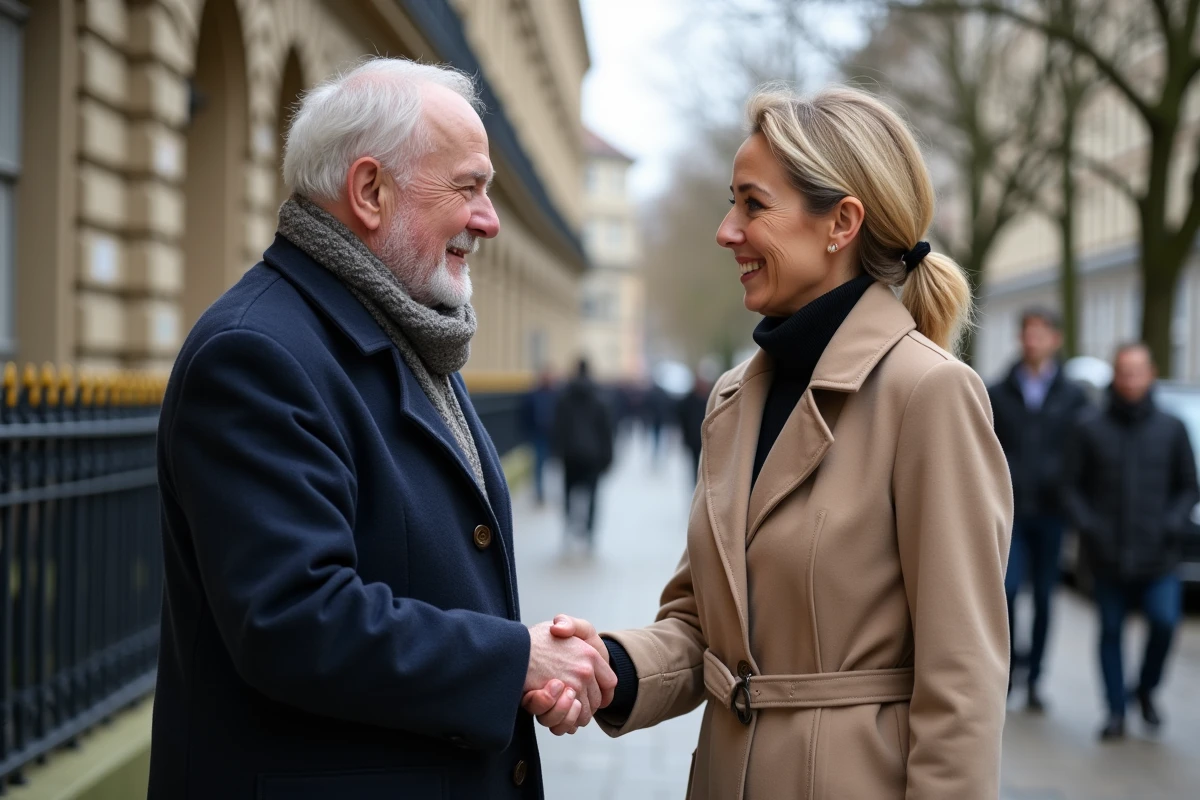
A handshake can open more doors than a perfectly written resume. In the professional world, this often-repeated detail remains the first judge of human relationships. Whether we like it or not, the way we greet, who takes the initiative, what we convey with a simple “hello”: all of this is read, interpreted, and sometimes judged harshly.
The codes of greeting have their rules, but nothing is ever as simple as following a guideline without thinking. In the workplace, the custom is for the initiative to come from the employee; however, as soon as one steps outside the professional framework, it is the superior who sets the tone. The French approach does not tolerate variable greetings: regardless of your closeness or rank, in front of a group, politeness requires greeting each person present. Neglecting this detail risks carrying an image that sticks for a long time.
Why greeting matters so much in social dynamics
Greeting is not just a simple reflex. This small gesture shapes the beginning of any authentic relationship, affirms everyone’s place, and conveys attention to the other, even silently. Avoiding this ritual is laying the first brick of a wall of indifference. Conversely, offering a genuine greeting opens a space of respect and establishes a climate of exchange.
In France, few take these codes lightly. The slightest negligence, a glance that is avoided, a mumbled hello, and the connection fades. However, customs have evolved: today, there is a search for more balance, but the hierarchical rule remains ingrained in certain practices.
Determining who should greet someone with respect requires a true sense of adaptation. Age, context, hierarchical level, general atmosphere: each parameter subtly changes the game. From the outset, an open smile, a firm handshake, or a simple direct look can set the tone for a lasting relationship.
To clarify the real utility of greeting in daily life, here are three dimensions that structure our exchanges:
- Recognition: considering the other as a full-fledged interlocutor.
- Social bond: avoiding indifference, laying the foundations of basic trust.
- Immediate impact: in formal situations, a gesture of politeness does not allow for mistakes or nonchalance.
Who should greet first? Customs according to the situation
Learning to greet is primarily about learning to read the context. In the workplace, hierarchy guides the form and timing: the superior remains in control of the signal, whether for a handshake or the famous kiss on the cheek. In an informal environment, spontaneity takes precedence.
Age also plays a role. The younger person pays respect to the elder, a sign of respect inherited from traditions. During a meal at a restaurant, it is the person who arrives last who greets the others, thus demonstrating their desire to fully belong to the group.
Gender difference, once a systematic reference point, is gradually fading in favor of a more egalitarian approach. It remains to observe the context: family, professional, or friendly, adjustment is key.
To help everyone find their way, here’s how to adapt politeness according to different environments:
- Professional setting: the superior determines the nature and timing of the greeting.
- In family or among close friends: the elder receives the first mark of respect.
- In a public place or restaurant: the person joining the group starts the greeting.
Greeting well, therefore, is never just about shaking a hand or saying a word. The attention we show, a warm smile, a sincere look: these gestures reveal the sincerity of politeness and anchor respect in our daily actions.

The subtleties that change everything: greeting well in daily life
Three key ingredients distinguish a respectful greeting: eye contact, a smile, and the name. Addressing someone while maintaining eye contact shows consideration. A sincere smile, even brief, lightens the encounter and invites dialogue.
When we take the time to name the person, the exchange instantly becomes personal. In the workplace, greeting while standing in front of a superior is always expected; for a seated woman, this gesture is anticipated from her in front of an authority figure or elder.
The rituals themselves evolve: handshake, kiss, wave, pat on the shoulder… Since the health crisis, new reflexes have emerged: measured gestures, sometimes no contact at all, and a renewed emphasis on the weight of words. Sometimes, only the voice matters: a simple but warm “hello” replaces the gesture and is enough to set the tone.
To avoid faux pas, keep these points of reference in mind:
- Dare to make eye contact, without ever crossing the line into insistence.
- Do not skip a smile, even in tense moments.
- Know how to choose the gesture or word when the situation demands it, particularly for health reasons.
Greeting without putting your heart into it means missing out on the entire social significance of this custom. To be convinced, just think back to the famous scene in The Devil Wears Prada: Miranda Priestly’s automatic greeting chills the atmosphere, a polite gesture devoid of warmth, and the room empties of any conviviality. It is in the details that everything is at stake: the difference between a mere automatic response and a real act of respect that makes one want to open the door, or not.